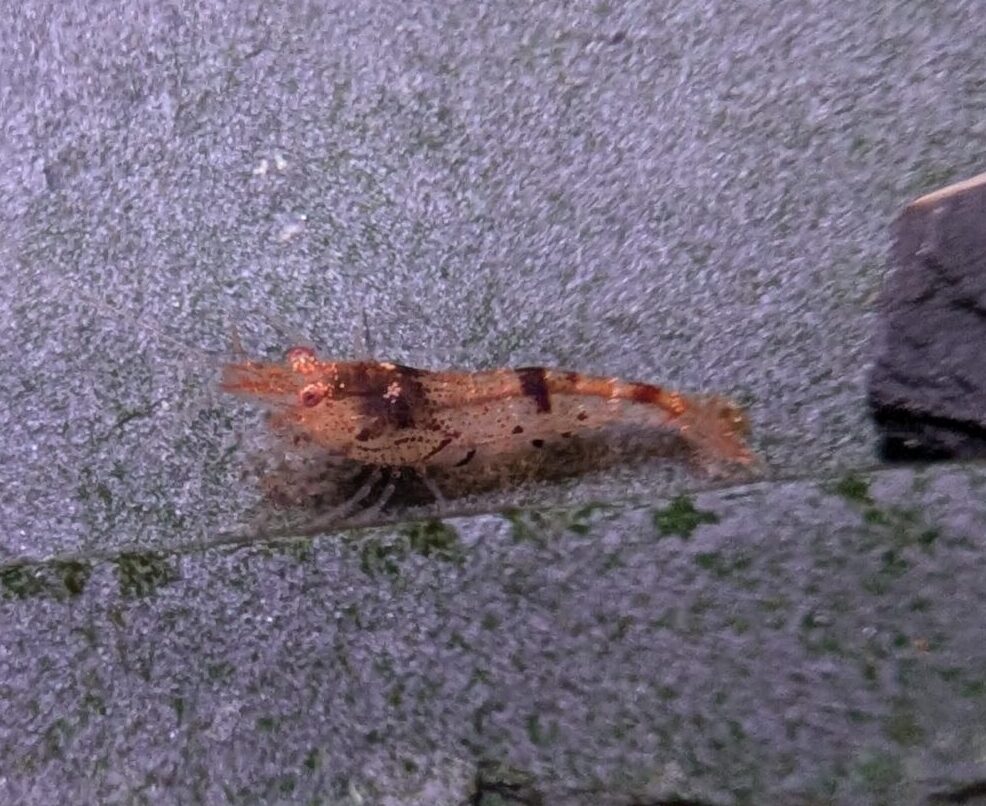
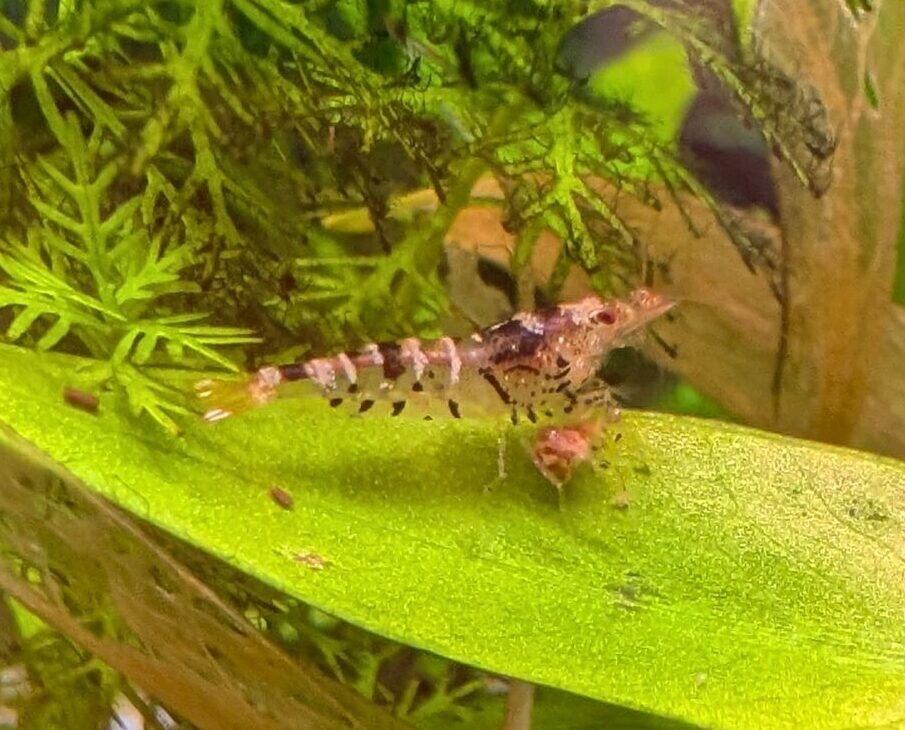
The new Caridina babies are getting bigger and it’s a little easier to see what they look like. Because they have a stripey appearance I thought they were wine red panda children but they have no real white colouration anywhere on them. To me they look like tangerine tiger shrimp that have some black stripes.
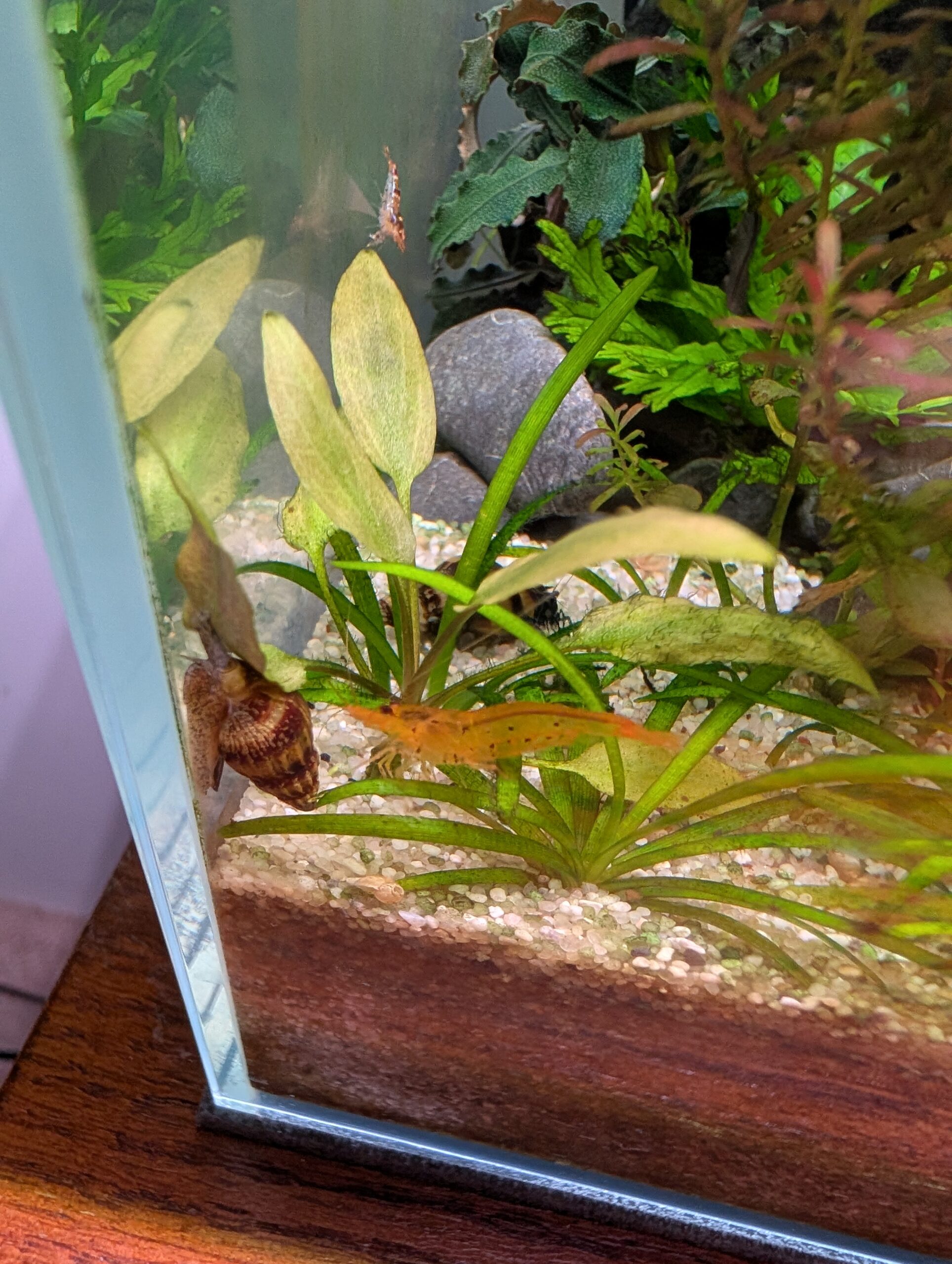
tangerine #1, baby above, assassin snail left
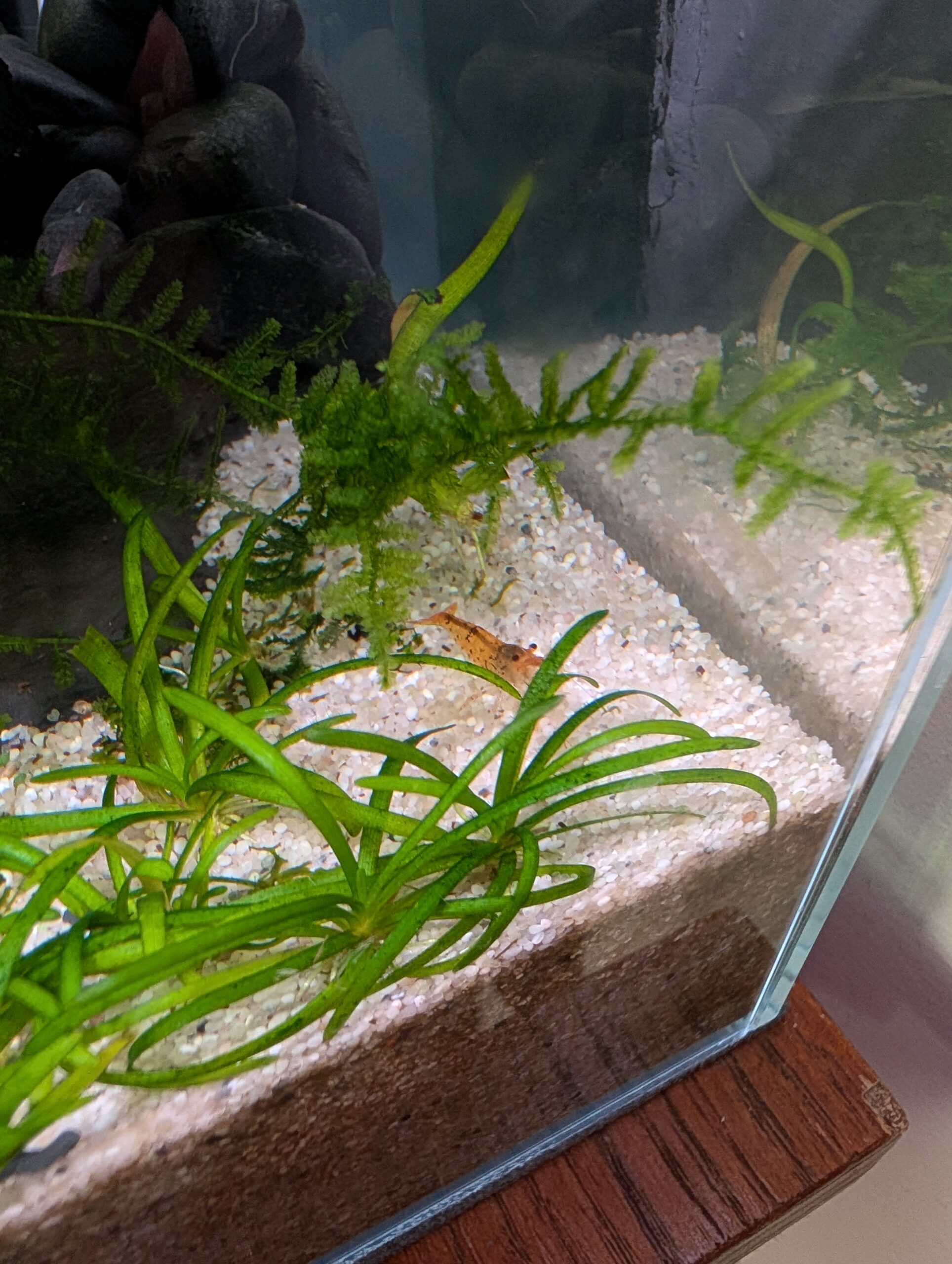
tangerine #2
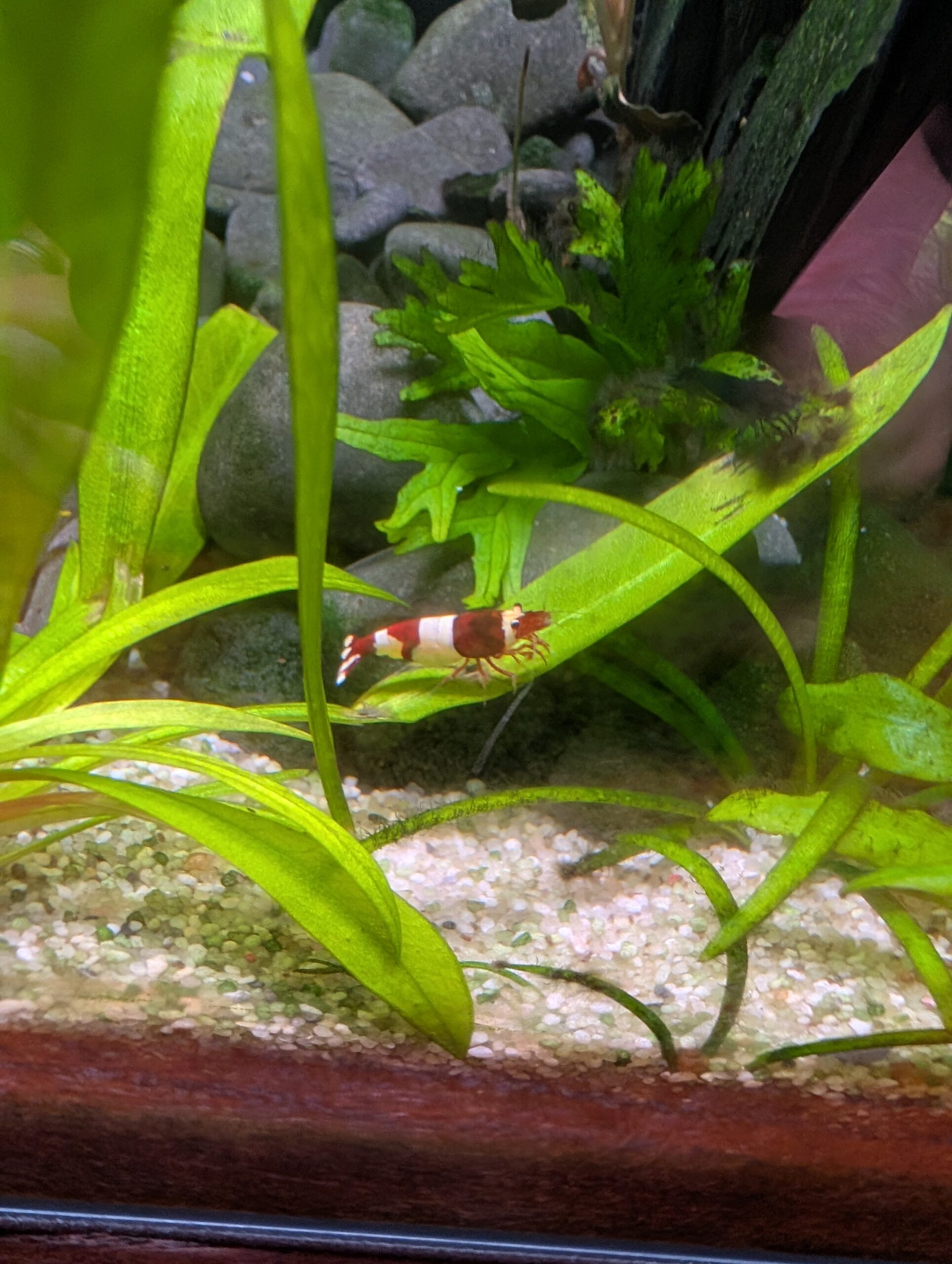
wine red panda
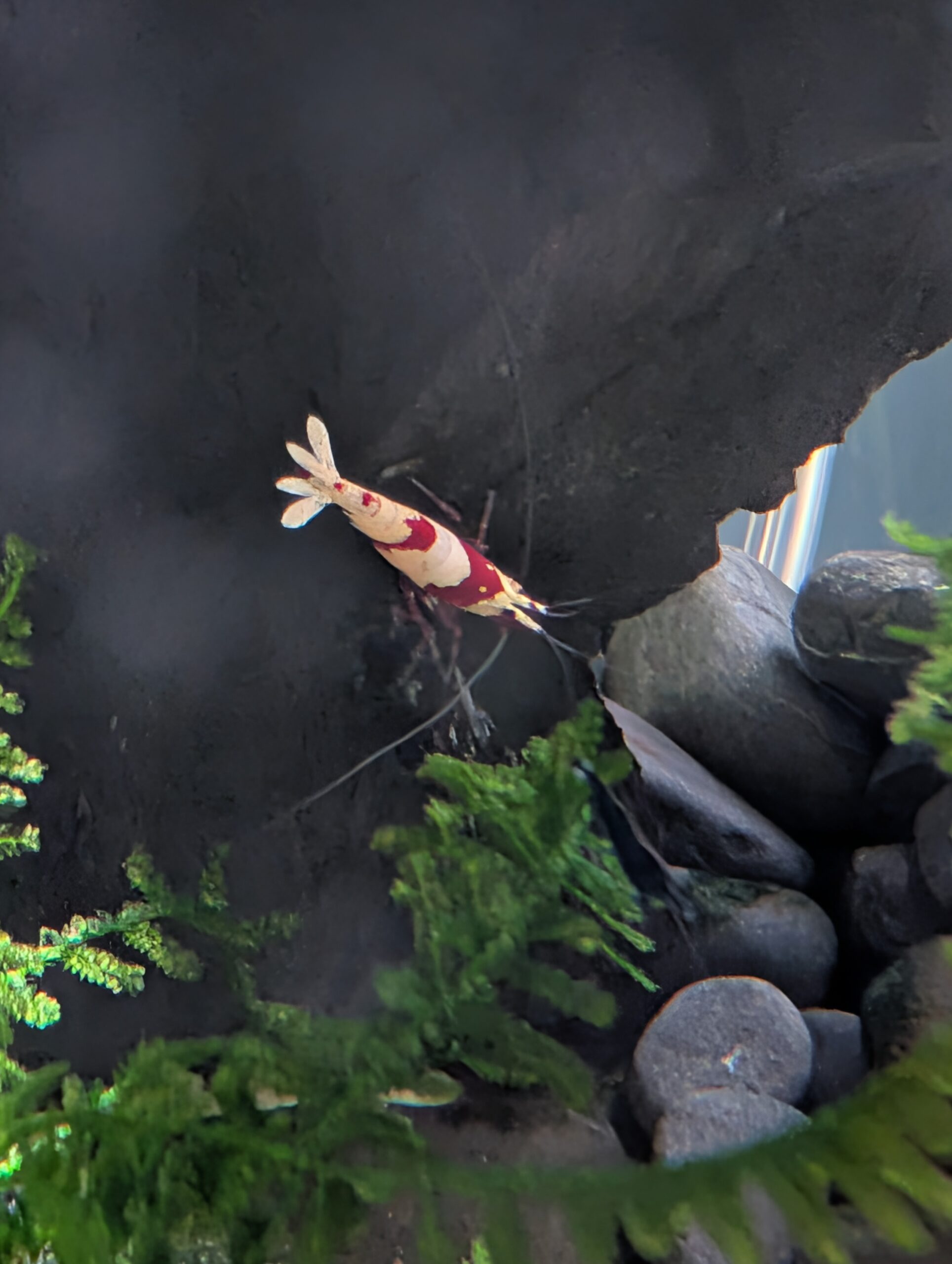
crystal red
Potential parents
new shrimp with possible parent
Here are the potential parents (I can’t tell the sexes of any of these) and their attributed species:
- 2 tangerine tigers (C. cantonensis)
- 6 wine red pandas (C. logemanni)
- 1 crystal red (C. logemanni)
The absence of white makes me think these are not straight-up wine red panda x wine red panda, or wine red panda x crystal red – the orangey-translucent overall aspects suggest the tangerine tigers are involved, which also fits with reports that tangerine tigers are generally easy to breed. I suppose a straight-up tangerine x tangerine cannot be ruled out, but I suspect these are cross-breeds, or ‘Mischling’ (German for ‘mixed’ – has a rather unfortunate etymology) as they are sometimes known in the hobby. They do look mostly like ‘tangerine #2’ in the images above, but with more prominent black stripes.
Shrimpy zoomers!
From time to time the shrimp will “go crazy” and zoom around inside the tank. One common interpretation is that this is behaviour exhibited by males when a breedable female has emitted pheromones into the water looking for a mate. I noticed both of the tangerine tigers and also the crystal red exhibiting this behaviour which makes me provisionally think they are all males.
Forthcoming F2 (or BC1?) generation
The mischling babies have all grown up and are ready to have babies of their own. Today I saw two berried females.
The big question is whether the forthcoming generation will be both viable and fertile. Cross-breeding can often produce a viable but not necessarily fertile F1 generation. The eggs are certainly a promising sign, but you don’t know until you know. If these eggs hatch successfully that would establish F1 fertility (of the females anyway). Backcrossing F1 to dads from either parental strain (if that’s what happened) would make the first back-cross generation (BC1) and align the genetics more closely with one of the original known-viable and fertile parental strains.
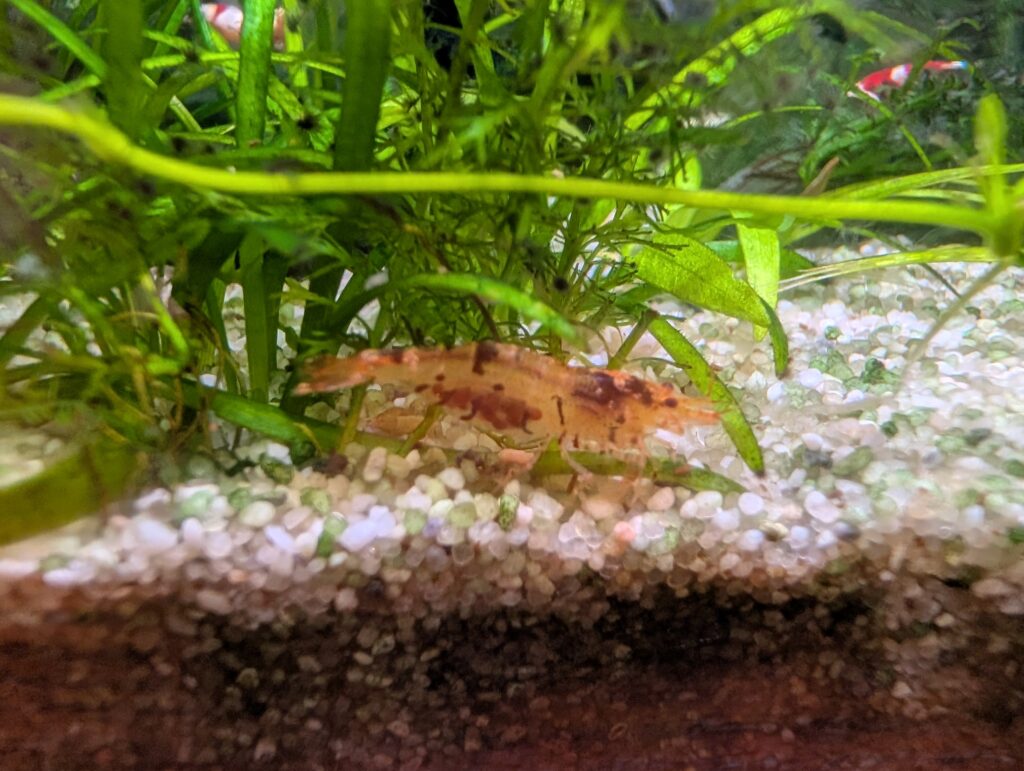
mum #1
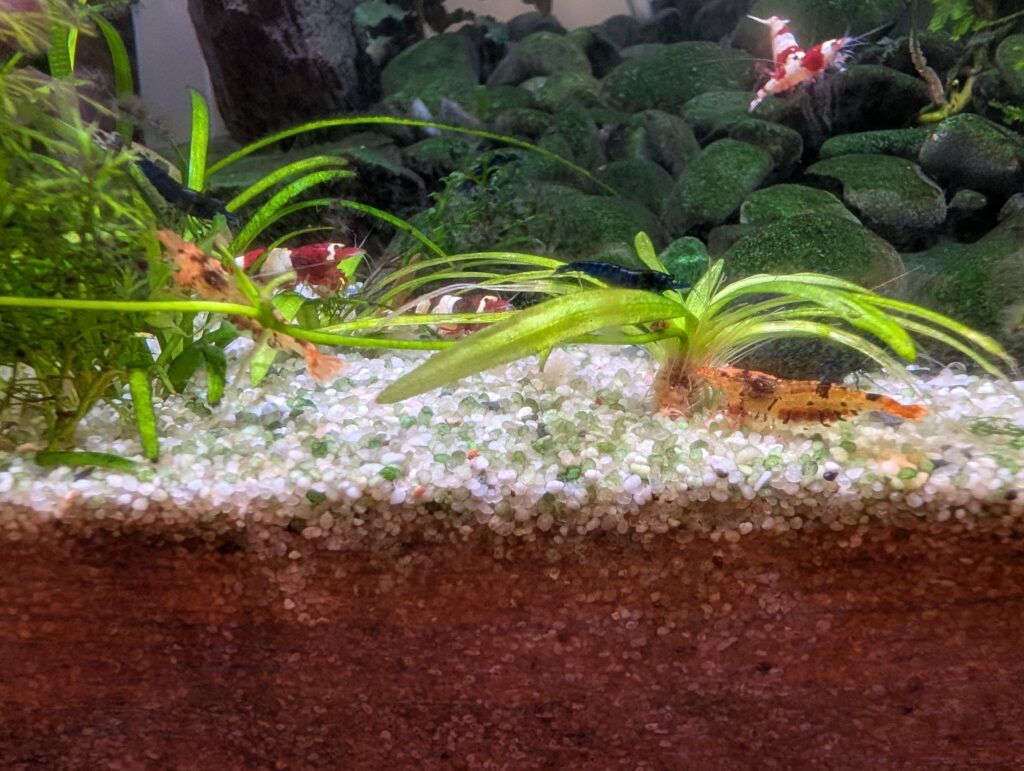
mums #1 and #2
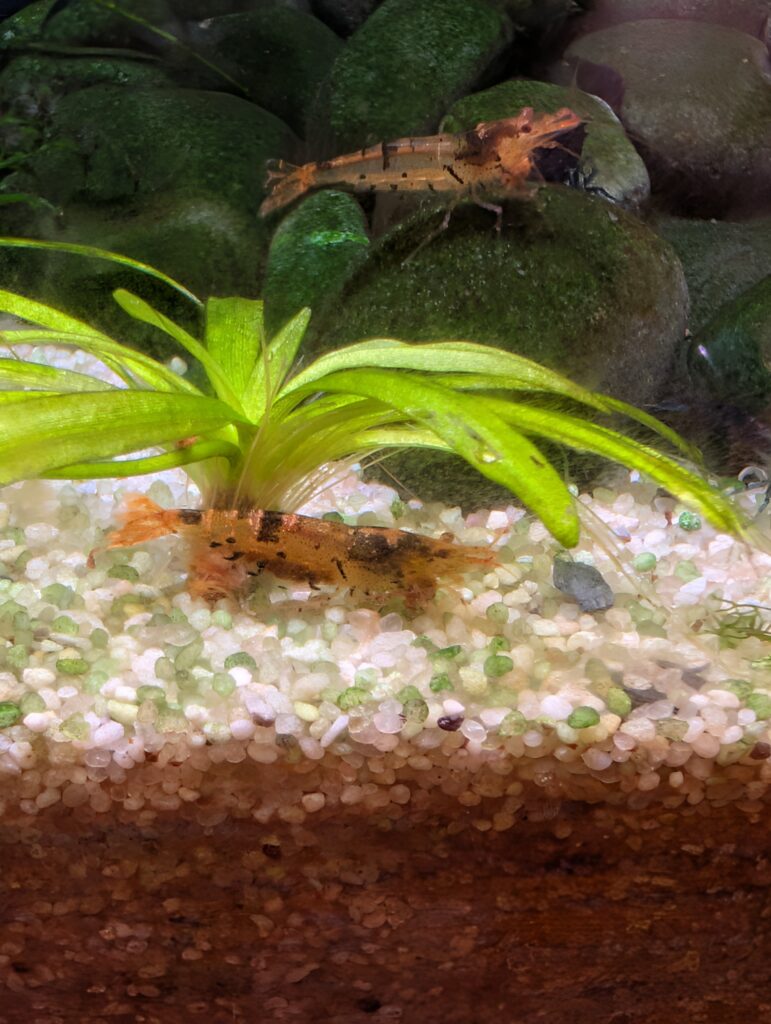
mum #2 (and dad?)
Of course it’s also possible for a F1 x F1 cross which enables an even wider range of genetics, in which case all bets are off.
Shrimp overpopulation?
I’ve never had to worry about overpopulation before in all the years of the Shrimphaus, but I’m starting to think about that now. Seems reducing copper has been a real difference-maker.