Successful caridina breeding!
Baby wine red panda shrimp
Shrimp love rocks!
Woo-hoo! The neocardinas in the Shrimphaus have been breeding at a pretty steady rate for a year, but not much luck with any of the caridina species – CRS, Tangerine Tigers, Wine Red Pandas – until now. Three possible reasons below.
Stable lower pH/KH
For a long time now, I have been treating our ‘liquid rock’ South Cambridgeshire water with HCl to strip out the alkalinity. I had been calibrating the KH using a Hanna total alkalinity titration kit with a bromophenol blue indicator. A couple months ago I upgraded the methodology to a much more accurate bromocrescol green / methyl red ‘mixed indicator‘ readout. This lets me much more accurately calibrate the water’s final alkalinity to 15 ppm CaCO3 equivalents. Note: now trying tweaking this down a shade to 10 ppm.
Copper removal
I’m pretty convinced that for sensitive species like caridina, just chelating toxic metals like copper using water conditioner just isn’t good enough. Three weeks ago I started using CupriSorb to get copper down to truly trace levels – less than 1 ppb (µg/L). I suspect this is a major determinant of the new breeding success. From the looks of it I’d say the caridinas are more sensitive to copper than the neocaridinas although not a lot of hard evidence in the literature either way in this not very rigorously explored topic.
Big hardscape cleanup

Two weeks ago I did a pretty big teardown and rebuild of the Shrimphaus, trying to remove a lot of mulm and general debris. I freshed up the rocks to more of a ‘scree slope’ type of configuration with a lower depth all-plastic airstone and gave a reasonable go at a big cleanup. It had been a while and might as well make it nice. There was a pretty good amount of debris that came out, but nothing shocking.
Good variety of new baby shrimp
There has pretty clearly been a good clutch of wine red pandas, and the usual ticking over of blue dream new juveniles, but it also looks like there is a potential new tangerine tiger. A little hard to tell yet but will become clear with time. It is also not impossible that there could be some crosses in there between the one remaining crystal red and the wine red pandas, and potentially Tibee shrimp from an interspecies cross. We’ll see how that all shakes out.
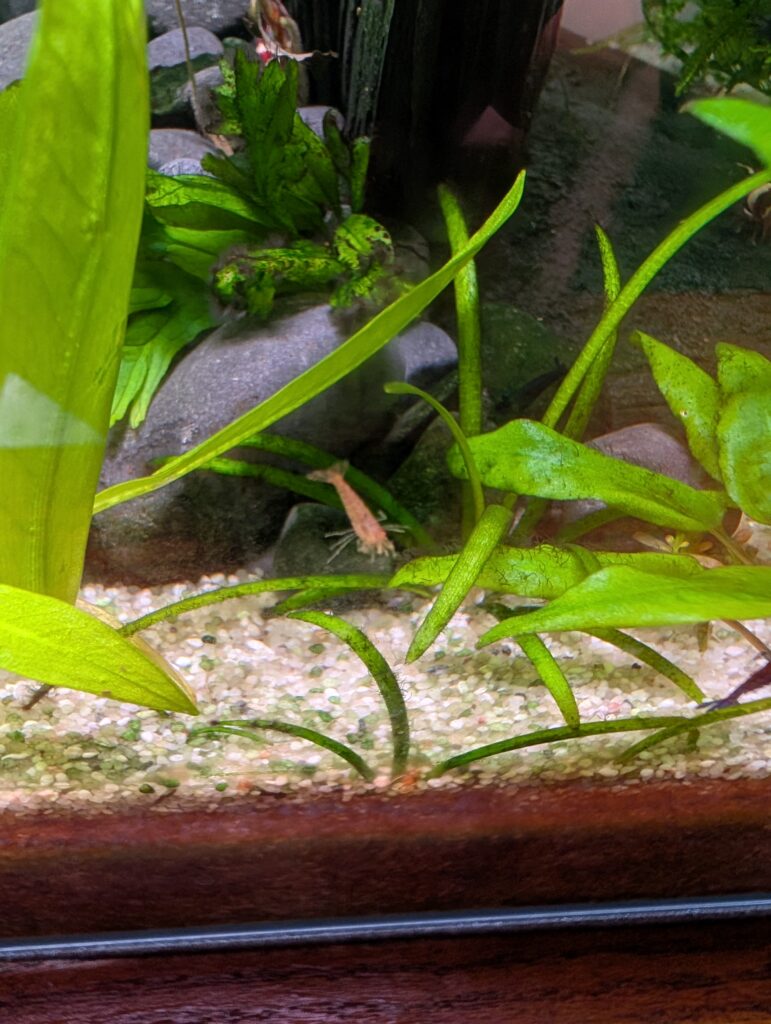
tangerine tiger (?)
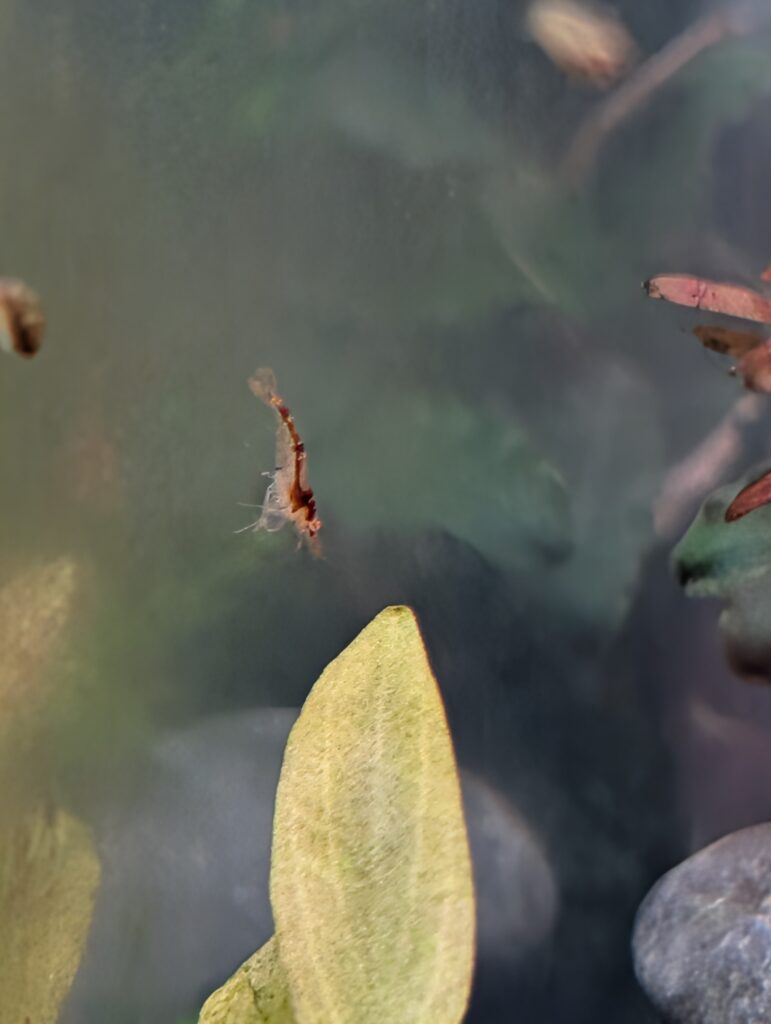
wine red
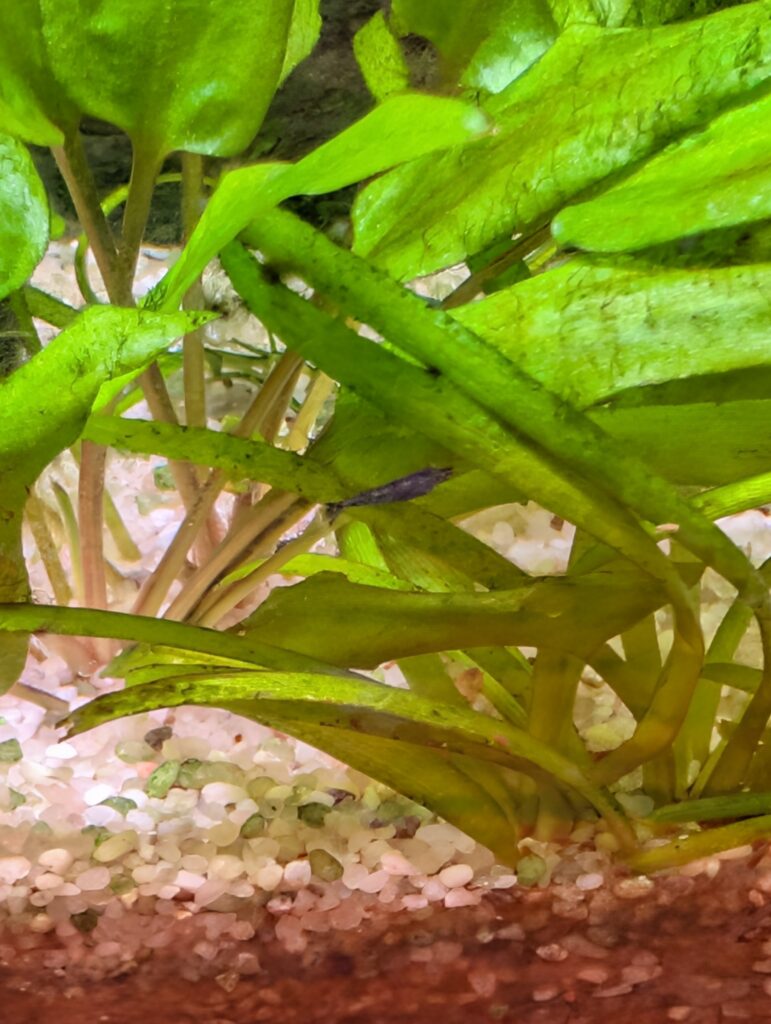
blue dream
Favour the heavy metal removal hypothesis – good selection of youngsters
My strong suspicion is the successful removal of heavy metal toxins like copper and zinc is driving the sudden new appearance of the youngsters. The timing is right and the alignment with lack of successful breeding from borderline copper toxicity has some reasonable supporting evidence.