Filed under “never seen that before” it looks like green spot algae (GSA) is in retreat in the Shrimphaus. The conventional wisdom (and my previous experience) is that algae colonies, once established, never spontaneous regress. You can remove damaged leaves to allow for new growth, and you can spot-treat hardscape and you can prevent new algal colonies from forming but you can’t reverse established algae damage. You can’t “cure” an existing algae problem. Until now apparently.
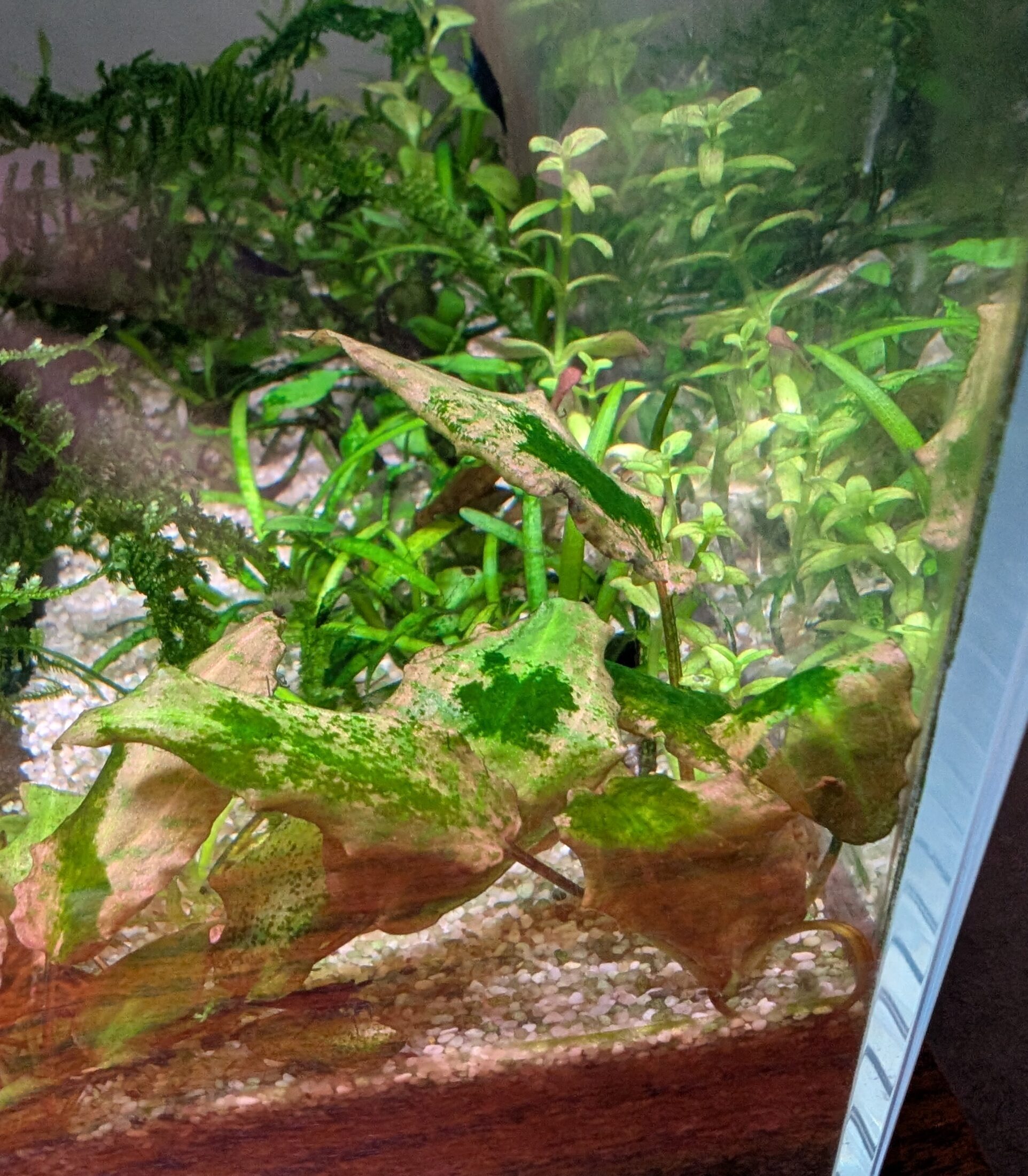
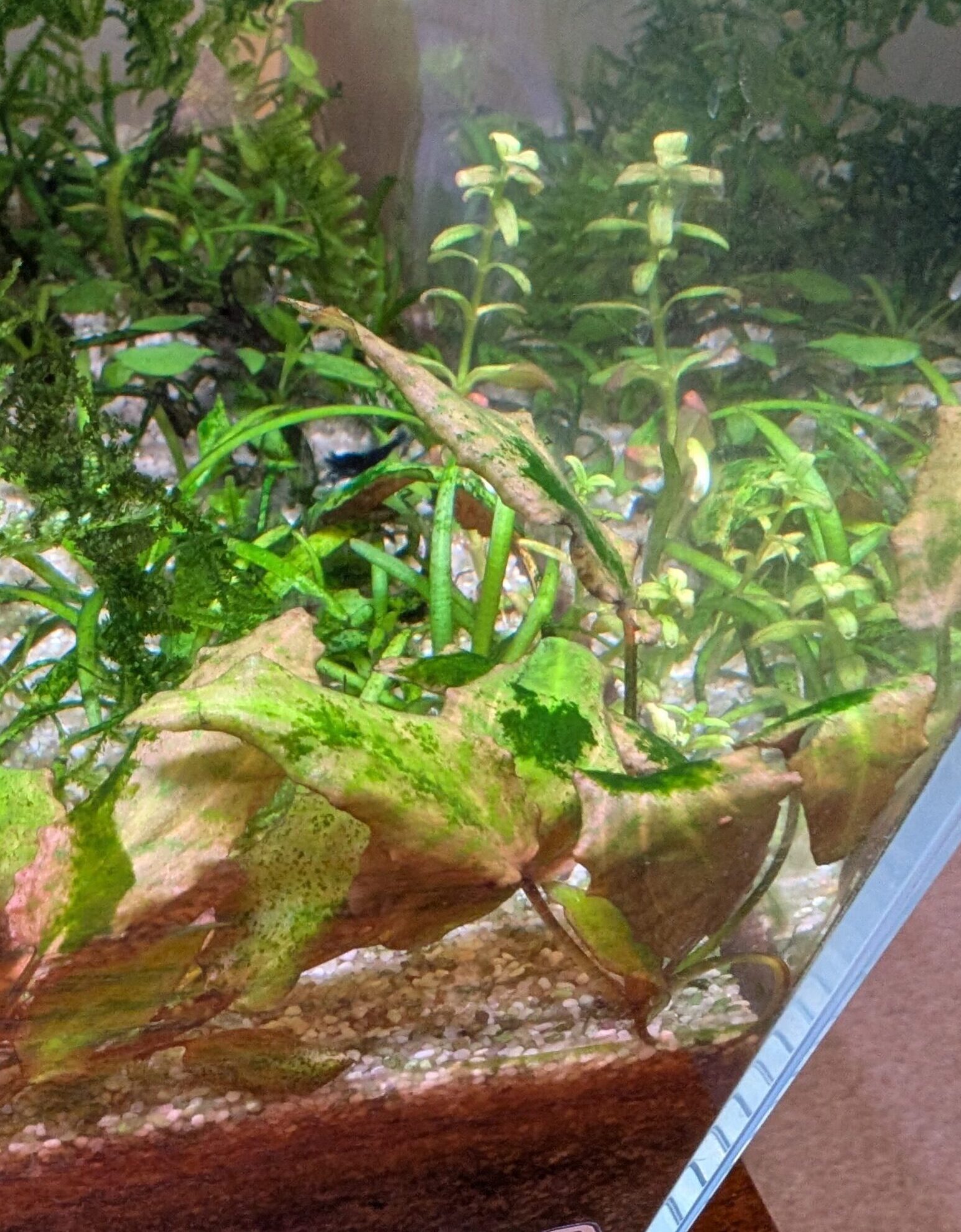
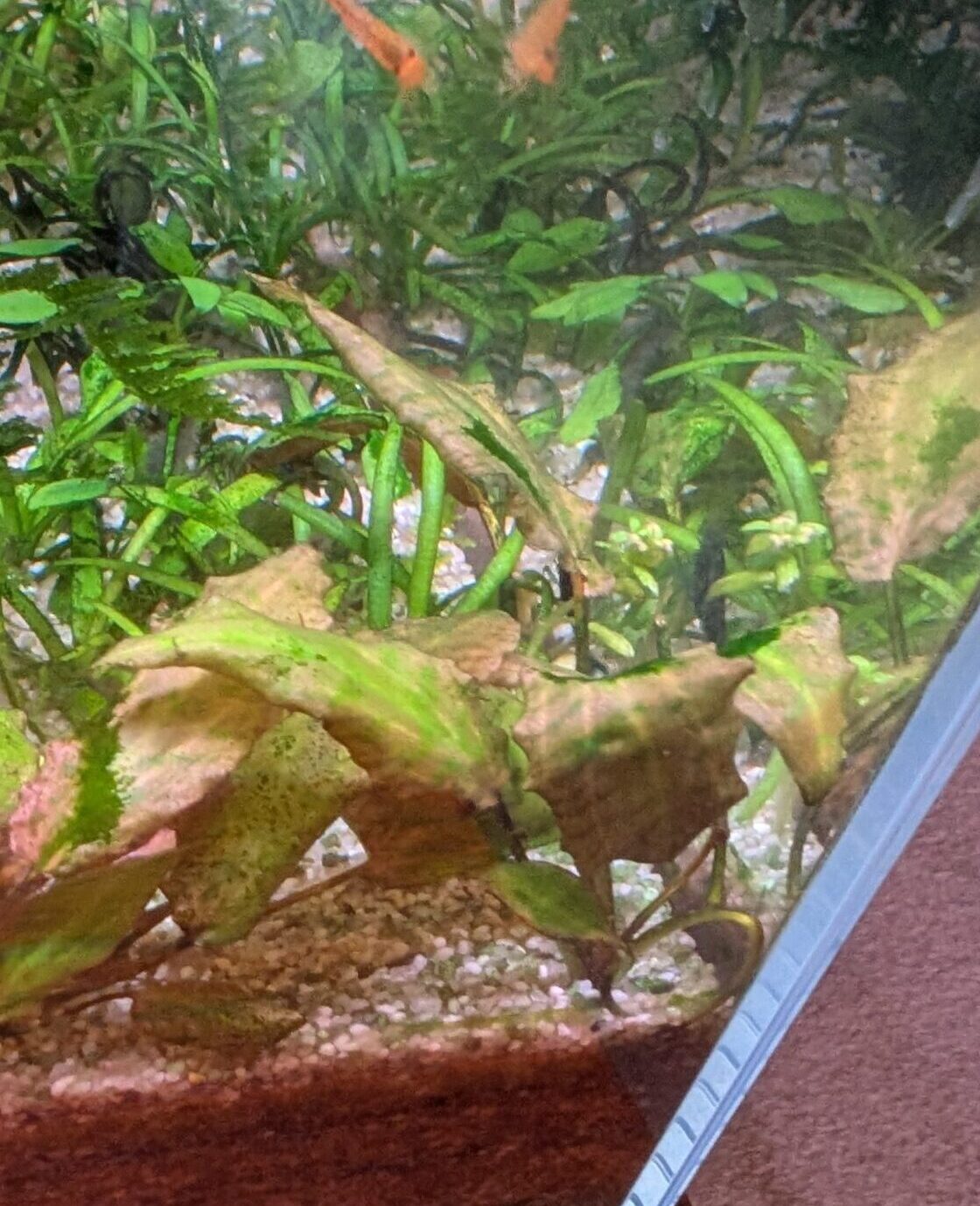
Cryptocoryne clears its algae infestation
Check out the GSA on this crypt. On 1-March the leaves are pretty heavily burdened with GSA. By 12-March the algae is breaking up and in clear retreat. On 24-March a lot of the algae has completely cleared away.
Rotala grows well and stay algae free
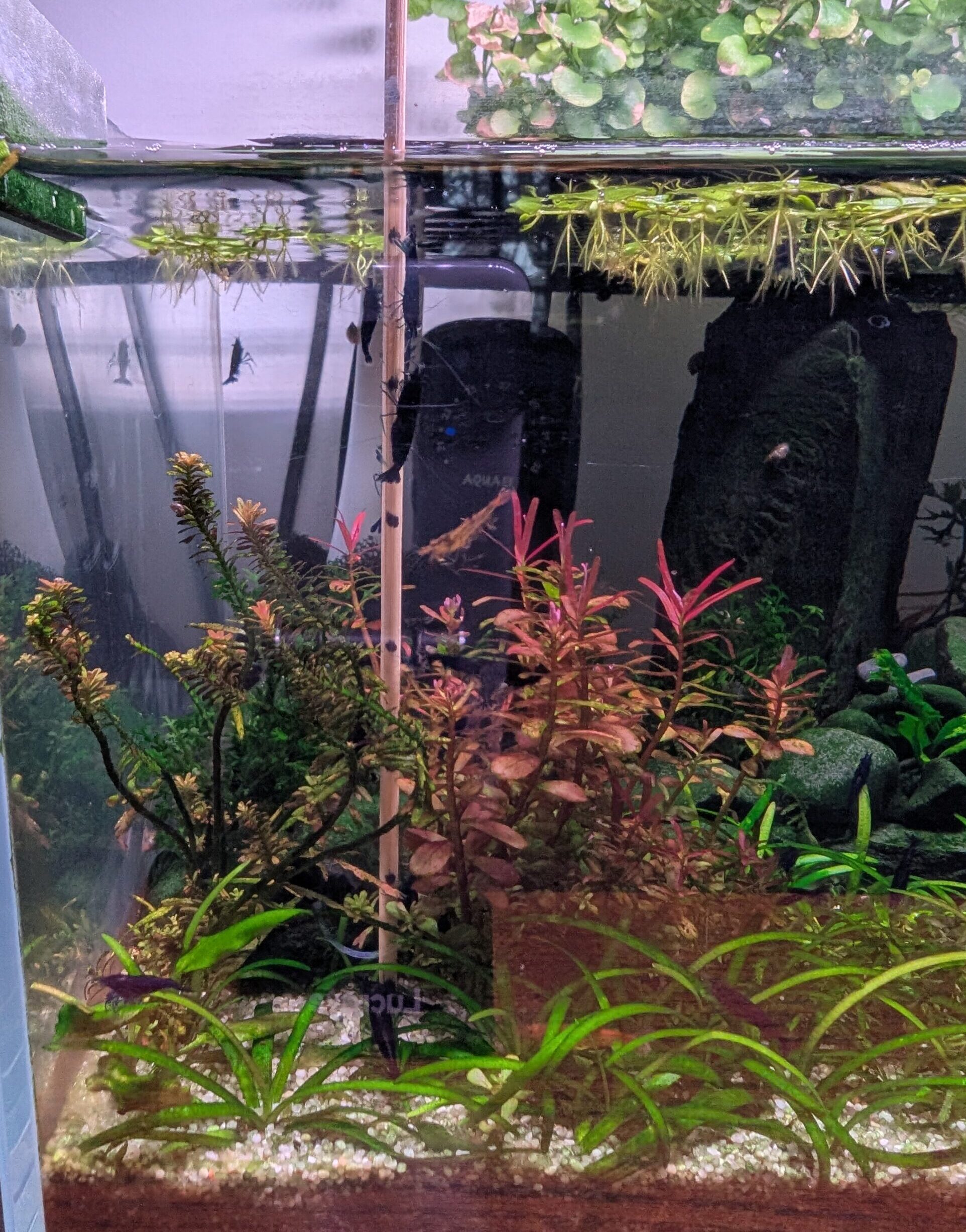
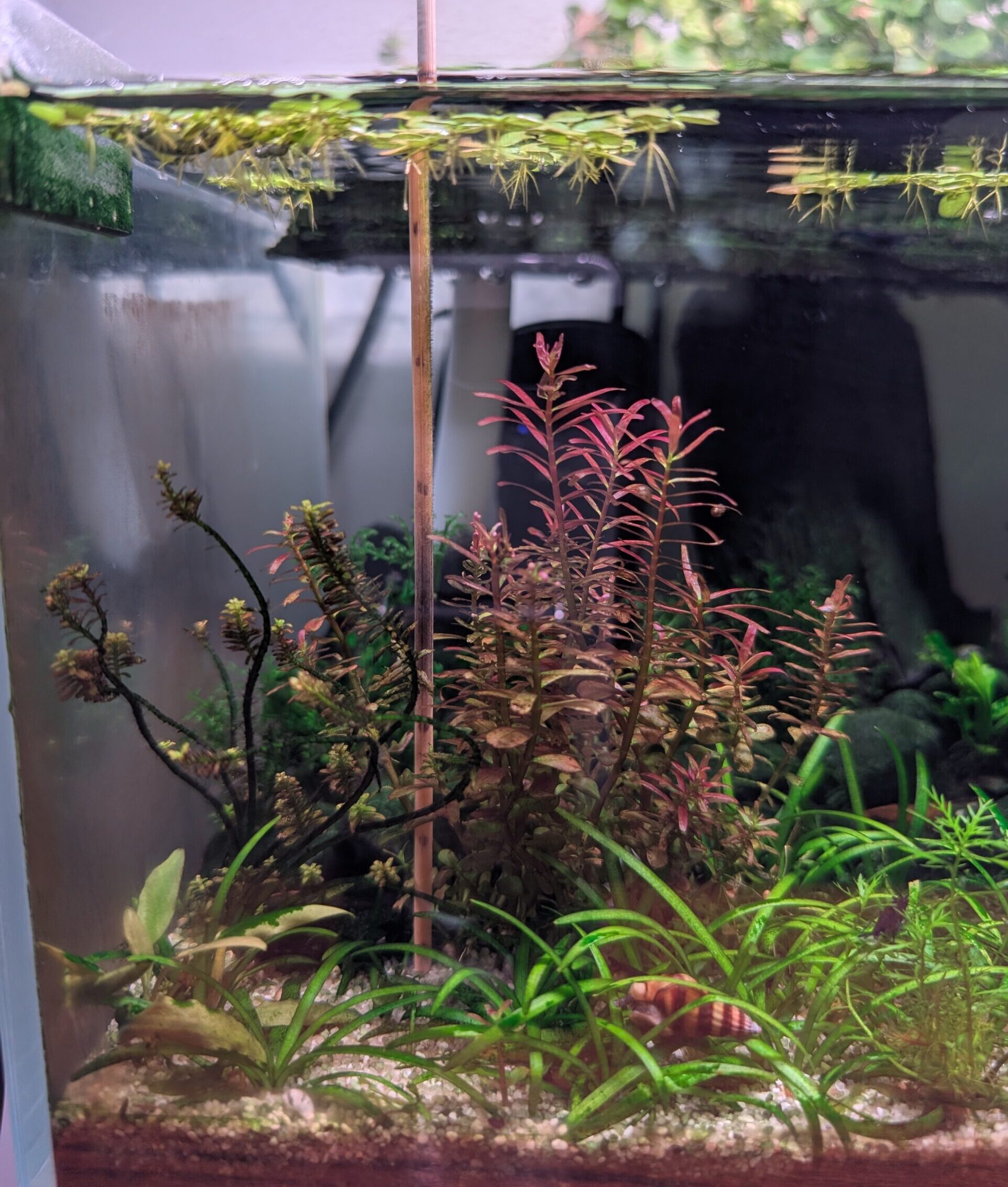
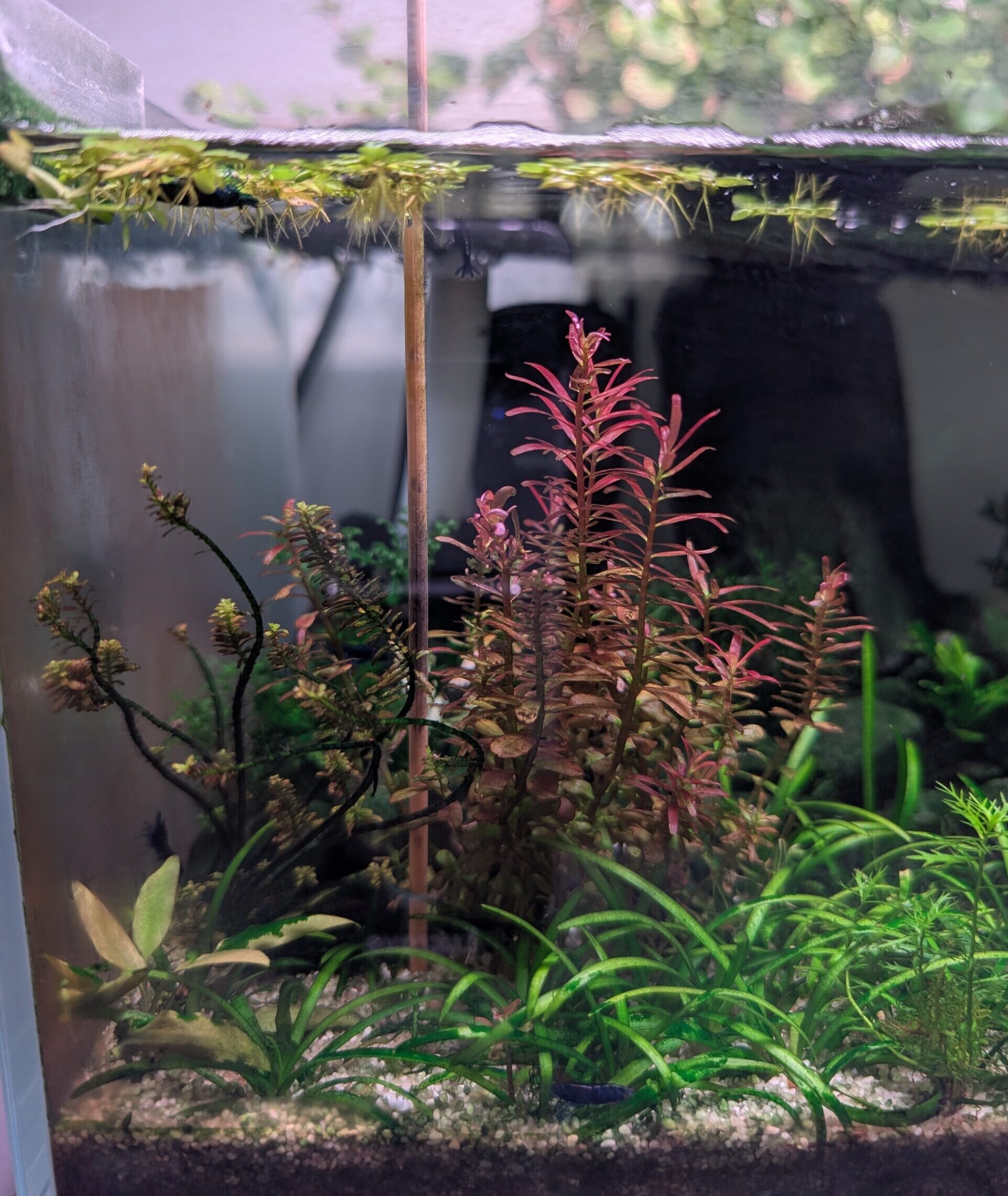
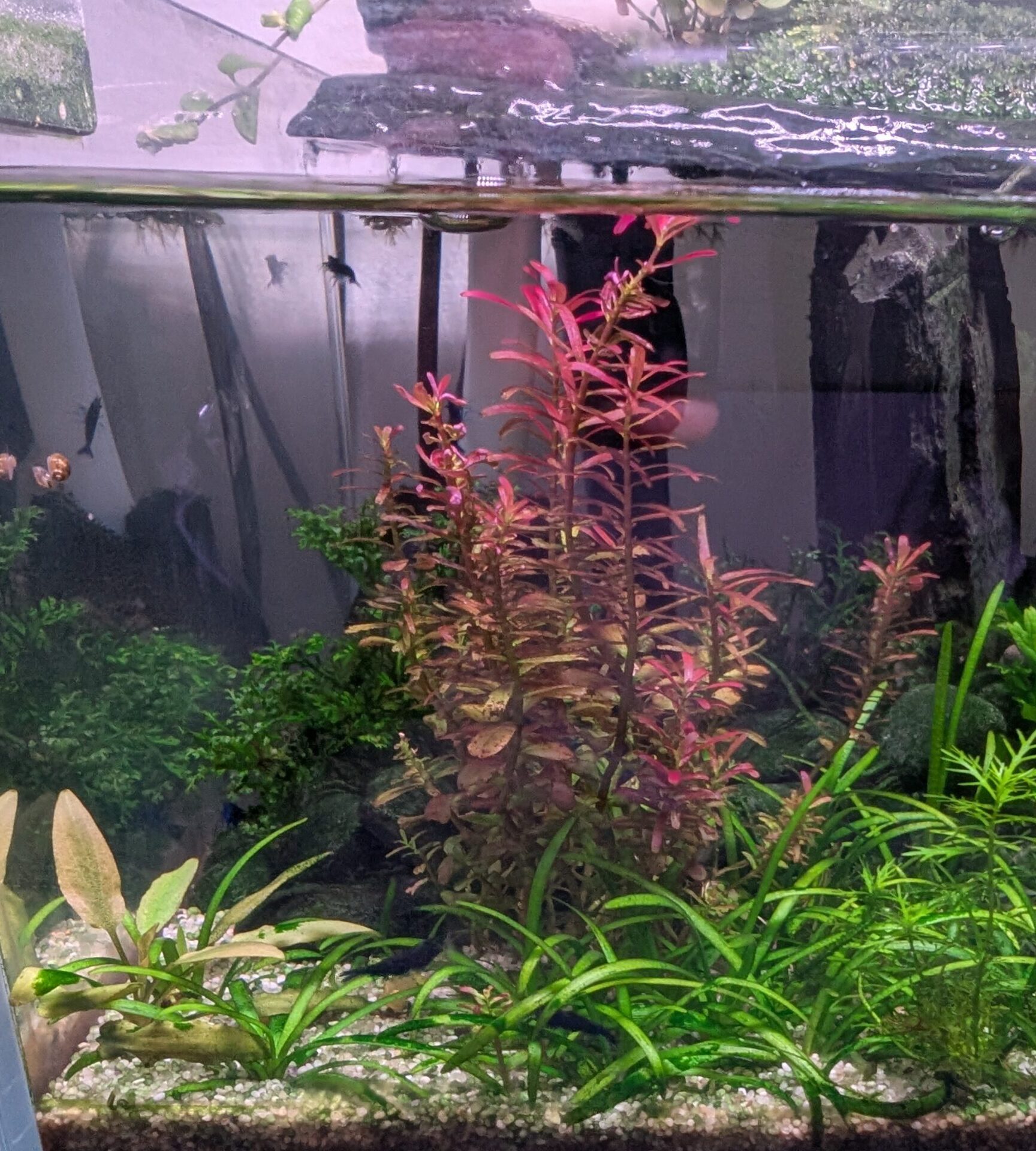
Rotala has had an interesting journey in the Shrimphaus. These were planted 10 months ago and, unusually, arrived already adapted to submersed growth. They looked wonderful to start but then became progressively more and more compromised, with short stunted leaves very short internodal distances and heavy algae colonisation. I blame this poor performance on photo-damage caused by lighting too intense for the limited carbon budget available in a low tech setup.
6 months after the first patch of Rotala went in, I planted a second batch next to them. The new rotala came in the usual emersed form growth and so needed to transition to submersed growth, which it did successfully. Emersed rotala has ovoid almost elliptical leaves whereas the submersed leaves are longer and skinnier and more needle-like.
In the picture carousel below the original Rotala is on the left of the marked bamboo stick I added as a height indicator and the new Rotala is on the right. The hypothesis was that having turned down the lighting intensity the older damaged rotala would recover and put out new healthy growth. That didn’t happen. The damaged Rotala continued to decline and I eventually decided it needed to be removed. Happily, the newer Rotala has done really well and hasn’t shown any signs of the damage suffered by its elder siblings and no sign of algae colonisation either so again it’s reduced lighting intensity for the win.
How to get algae to clear
If only there were a simple explanation and reproducible method. I expect in the case of the Shrimphaus specifically, a major trigger for improvement was the recent lighting intensity decrease on 12-Jan-2026 since there haven’t really been any other changes lately. The idea is that plants damaged by excessive lighting do a bunch of algae-friendly things including having roughed and physically compromised leaf surfaces, exudation of a variety of organic compounds and generally decreased growth and fitness. Resolution of these light-mediated problems (apparently) reverses the effect. I suspect there is an element of alleopathic algae resistance as well contributing to the shift in overall environment from algae-permissive to algae hostile.
Interestingly I still get algae growth on the slate hardscape, so there is a definite contribution of having healthy leaf structure vs. an inert surface to keeping algae at bay. I don’t think the explanation is as simple as ‘the light isn’t intense enough to grow algae’ because algae has also successfully colonised plants that are growing in permanently shaded regions of the Shrimphaus. I think the algae there is also gradually clearing, but it is less obvious than the algae reduction in the better illuminated regions, where you would expect plant damage from excess lighting intensity to be maximised.